


Dr. Sudhin A. Shah, PhD
Co-Founder & CEOEngineer and neuroscientist with 16 years studying cognitive recovery at Weill Cornell Medicine, where the research led to MINDstat.
Columbia · Cornell
LinkedInMINDstat is designed to measure cognition objectively using the brain's own response to spoken language, with no motor response required.
For years, no one could tell Aidan’s family he was still there.
patients who can’t respond to commands still show the brain activity of following them.
Bodien et al., NEJM 2024Cognition is often assumed from behavior rather than measured directly. Missing covert awareness can affect decisions about rehabilitation and continuation of care.
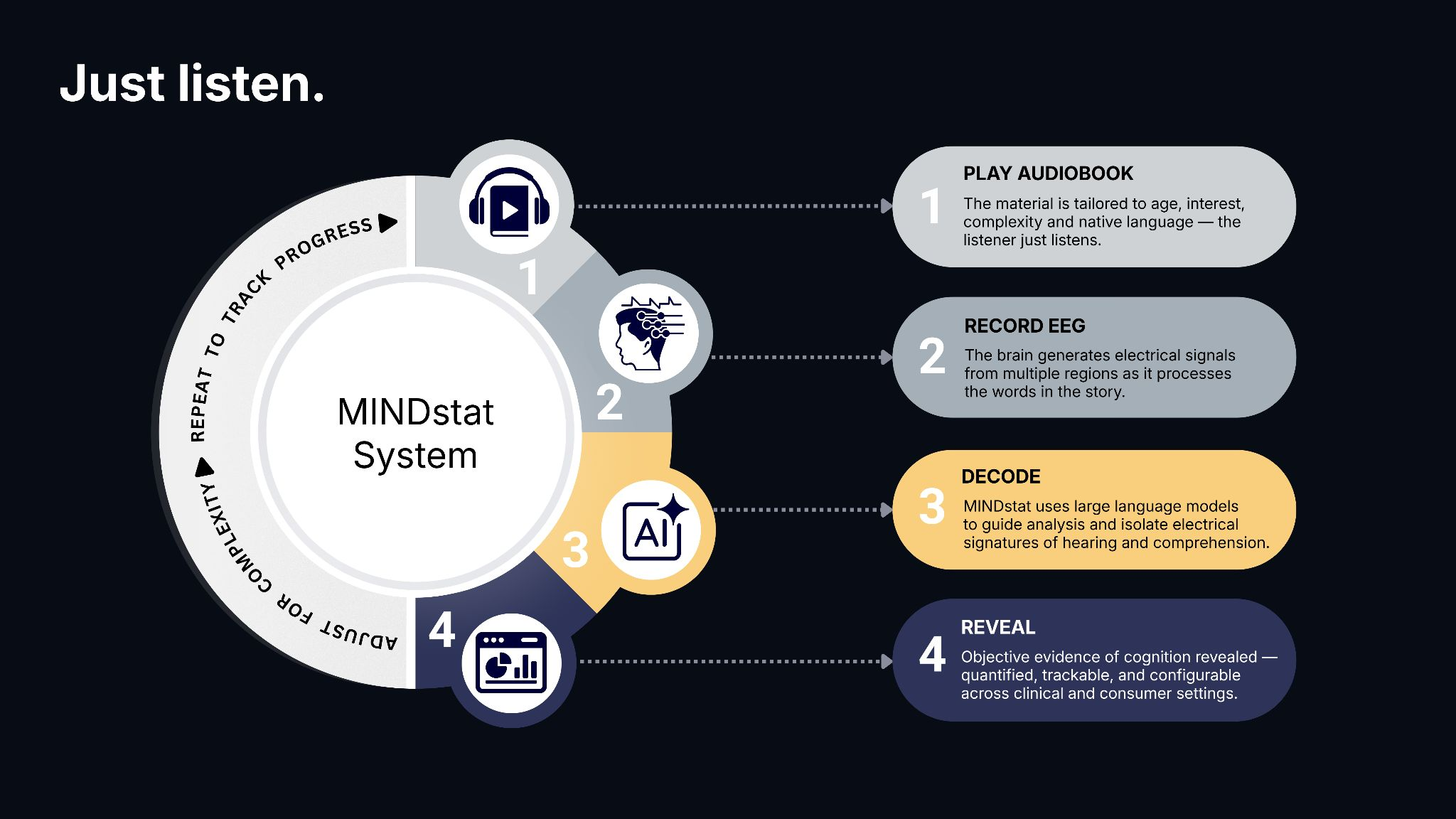
MINDstat System
The material is tailored to age, interest, complexity and native language — the listener just listens.
The brain generates electrical signals from multiple regions as it processes the words in the story.
MINDstat uses large language models to guide analysis and isolate electrical signatures of hearing and comprehension.
Objective evidence of cognition revealed — quantified, trackable, and configurable across clinical and consumer settings.
Engineer and neuroscientist with 16 years studying cognitive recovery at Weill Cornell Medicine, where the research led to MINDstat.
Columbia · Cornell
LinkedIn
First to demonstrate BCI decoding of auditory attention. Architect of MINDstat’s decoding intelligence.
Oxford · Max Planck
LinkedIn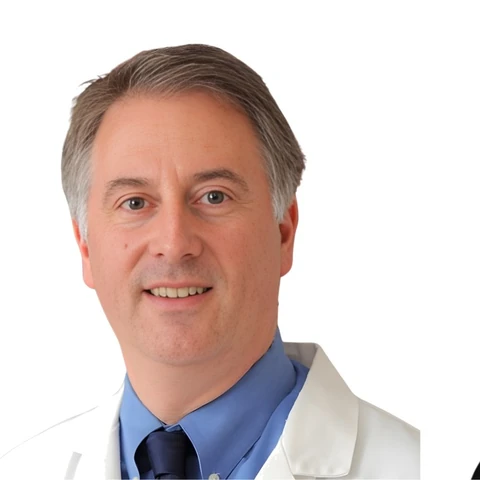
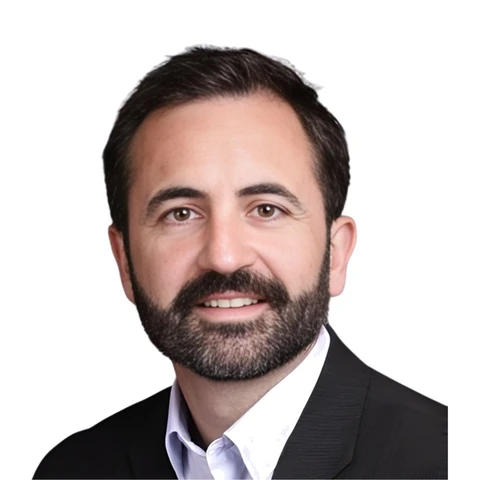
Defined cognitive-motor dissociation. Pioneer of deep brain stimulation for recovery of consciousness.
Stanford · Cornell
Created the foundational computational tools underpinning modern EEG-based language and cognition research.
Trinity College Dublin · University of Rochester
LinkedIn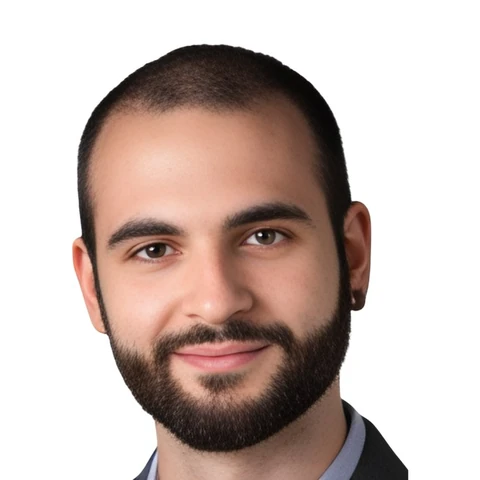
Physicist and signal-processing engineer. Co-lead of clinical validation studies.
Yale · Cornell
LinkedIn
Lived-experience lead. Her relentless pursuit of answers for her son is the reason this company exists.
LinkedIn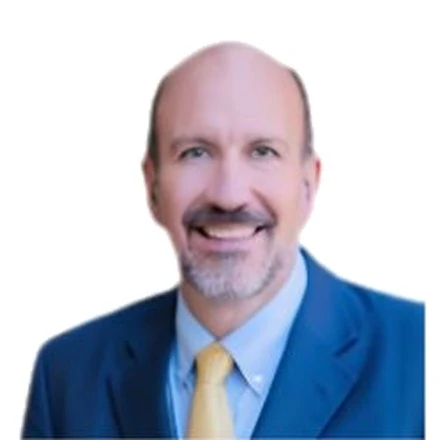
Founding director and past president of the Neurocritical Care Society. Co-chair of the Curing Coma Campaign. Chief of Neurocritical Care at Zuckerberg San Francisco General and Professor of Neurology and Neurosurgery at UCSF. Chaired the national guidelines for intracerebral hemorrhage, with 24,700+ citations.
LinkedIn
Chief of Critical Care Medicine and Director of the Cardiothoracic ICU at MUSC. Specializes in advanced monitoring and AI-driven decision support for the highest-acuity patients. Co-founder of a physician-led firm guiding medtech from lab to market.
LinkedIn
Invented the endovenous laser treatment now used as the global standard of care for venous insufficiency. President and CEO of the Weill Cornell Physician Organization and Chair of Radiology, overseeing clinical operations across one of the nation's top academic medical centers.
LinkedIn
Co-founded Prove Identity and led it as CEO into the world's leading identity and verification company. A unicorn serving 19 of the top 20 US banks and 2,000+ enterprises across 195 countries.
LinkedInPeer-reviewed work on natural speech, comprehension and covert cognition forms the scientific foundation for MINDstat.

Naming the problem: Schiff defined cognitive motor dissociation: awareness the brain shows on imaging or EEG that the body can’t show through movement.

The foundation: EEG can track how the brain processes the meaning of each word in natural speech. This signal is present when listeners understand speech and diminishes when they don’t.
The bridge to patients: In patients with severe brain injury, the brain’s EEG response to natural speech matched what motor-imagery tests showed about hidden cognition, without the need for a motor command.

Evidence it reflects comprehension: The brain’s response to word meaning depends on following the story as a whole, so it reflects real comprehension and not just word recognition.
The pediatric gap: Cognitive-motor dissociation is not just an adult problem. Two adolescents considered unresponsive for years showed clear evidence of understanding on EEG and fMRI.
From yes/no to a scale: EEG markers of how the brain responds to sound separated four levels of cognitive state in 47 children and adolescents, and identified hidden awareness that bedside exams missed.

Why it matters: About one in four unresponsive patients could follow motor-imagery commands (“imagine squeezing your hand”) in their brain activity, but those tests demand sustained effort, a gap that natural speech listening can fill.

Bringing it to patients: In a case series of patients with disorders of consciousness, EEG responses to the meaning of natural speech revealed covert cognition alongside standard motor-imagery testing.
Coverage of Cognitive Signals and our team members in talks, podcasts, interviews

Nicholas Schiff discusses cognitive motor dissociation, the challenges of assessing patients who cannot respond to commands, and the implications of detecting hidden cognition.
Read interview: NeurologyLive
Nicholas Schiff on hidden awareness

Cognitive Signals selected to pitch at Eclectic Convergence 2026, the Cornell Entrepreneurship Summit at Cornell Tech.
View event: Eclectic Convergence 2026

Chay Carter interviews Sudhin Shah and Jeremy Hill about MINDstat, natural-language EEG and the company’s path toward clinical use.
Read feature: Carter Intel
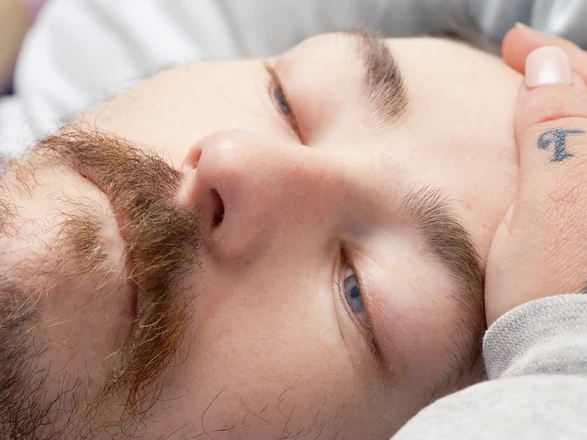
Katie Engelhart examines hidden consciousness, the limits of bedside assessments and the difficult choices facing families, including perspectives from Nicholas Schiff and other researchers.
Read article: The New York Times Magazine
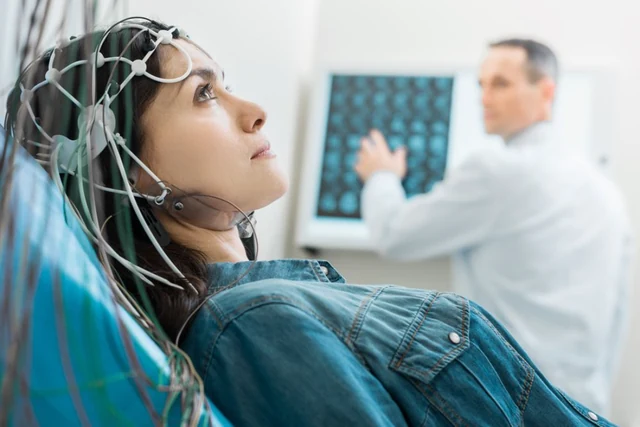
Weill Cornell Medicine introduces Cognitive Signals and its approach to measuring responses to natural spoken language when patients cannot communicate through behavior.
Read post: LinkedIn

Cognitive Signals announces its participation in the Cornell Silicon Valley Showcase on 26 March 2026 in San Francisco, introducing its approach to objective cognitive assessment.
Read post: LinkedIn

Weill Cornell Medicine highlights Sudhin Shah among the innovators pitching to investors at Ignite Connect 2026, with her presentation in the Digital track.
Read post: LinkedIn

Sam Jones reports on cognitive motor dissociation, with commentary from Sudhin Shah and Laura Galaska on recognizing hidden consciousness after severe brain injury.
Read article: The Washington Post
 LinkedIn